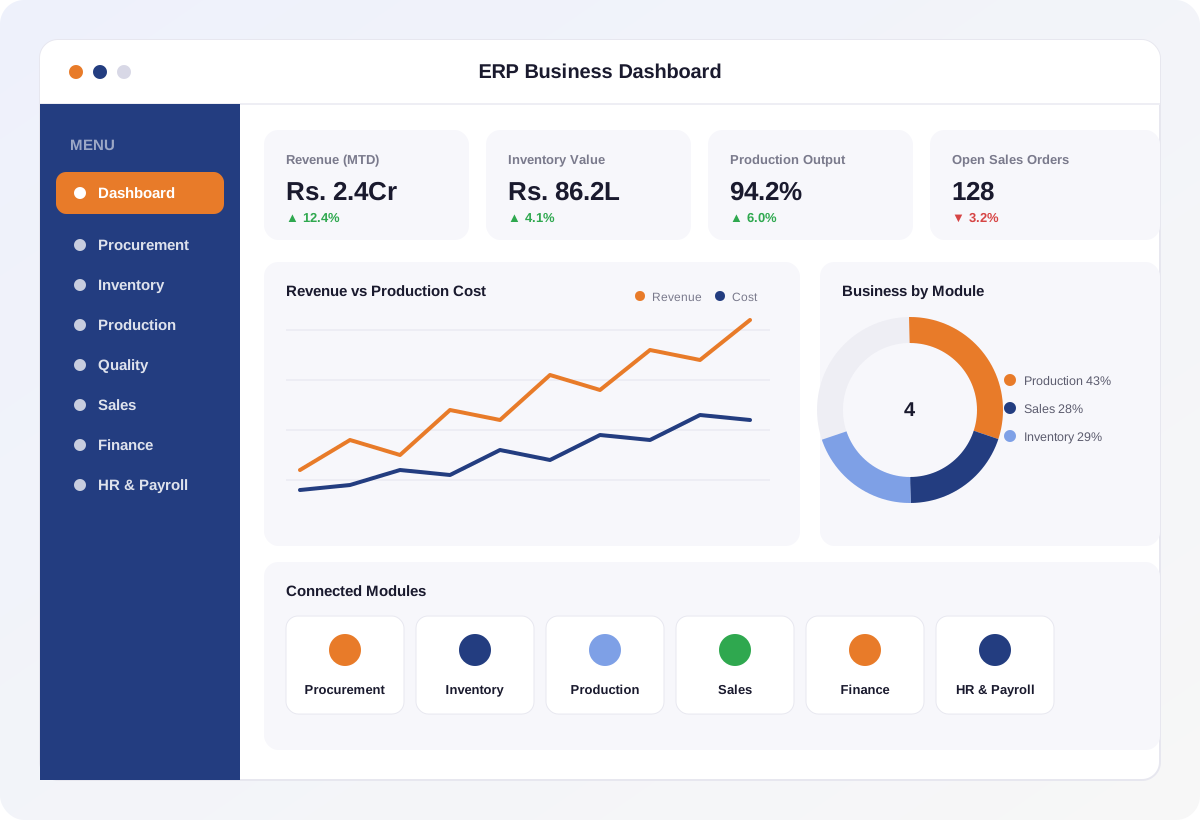
Modern ERP Software for Smarter Business Management
One Powerful ERP Platform to Manage Your Entire Business
Run your business with a powerful, scalable and integrated ERP software designed to connect finance, procurement, inventory, production, quality, sales, HR, payroll and business operations in one unified platform.
From managing multiple companies, plants and warehouses to controlling procurement, production, inventory, sales and financial processes, the ERP provides a single source of truth for your organization.
One platform. Connected processes. Better business decisions.
ERP Software Built for Modern Businesses
Growing businesses often struggle with disconnected applications, duplicate data, manual processes and limited visibility across departments. A modern ERP system brings these operations together into one connected business environment.
With configurable workflows, role-based access, automated accounting, real-time inventory costing and actionable business reports, your teams can work more efficiently while management gets the information needed to make faster, better decisions.
The platform is designed to help organizations:
One ERP Platform. Multiple Business Functions.
Procurement & Inventory
Take control of your complete procurement and inventory lifecycle — from routine purchases and overseas imports to long-term contracts and outside jobwork, with structured approval processes to ensure purchases are properly reviewed and controlled.
Production & Manufacturing ERP
Manage production operations with greater visibility, control and accuracy. Create Bills of Materials (BOMs), define alternate materials, and monitor actual material consumption against production planning to understand the true cost of every produced item.
Quality Management & Real-Time IPQC
Quality control is an important part of every manufacturing operation. The ERP provides capabilities to manage quality checks across different stages of material and production movement, capturing critical information in real time.
Complete Inventory Traceability
Know where your inventory comes from, where it moves, and how much it costs. The ERP provides end-to-end stock traceability, including supplier batch and costing information, for more transparent stock management.
Sales & Marketing Management
Convert opportunities into customers with a structured sales process — tracking the complete journey from initial enquiry to customer conversion, connected to quotations, orders and receivables. Generate quotations for new leads without requiring the customer to be created first, and connect scheduled receivables directly with sales orders. The platform is also designed to support E-Invoice and E-Way Bill integration.
Powerful Accounting & Finance ERP
Get deeper visibility into financial operations with an integrated accounting system. Analyze financial reports with drill-down capabilities to move from summary-level information to transaction-level details. The ERP can automatically post vouchers for relevant sales, purchase and production transactions, and supports GST and TDS automation along with a centralized fixed asset register and depreciation calculation.
HR, Payroll & Employee Self-Service
Bring employee information, attendance and payroll processes into one connected HR environment — giving HR teams centralized access to employee information while providing employees with convenient self-service capabilities.
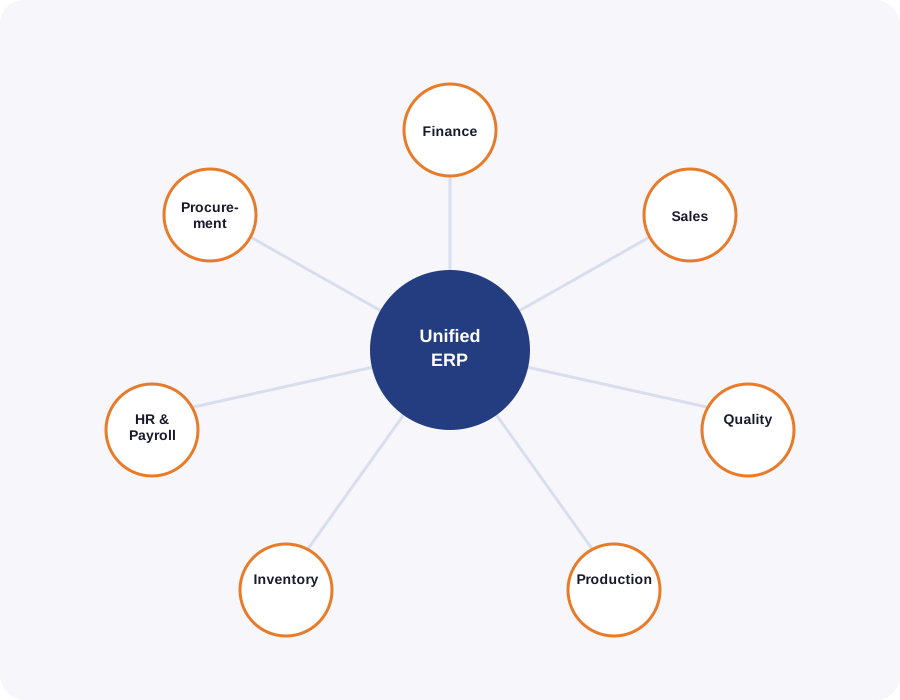
Connect Every Department on One ERP
A truly integrated ERP should connect business functions instead of creating isolated departmental systems.
One Connected Platform For:
- Procurement — Purchasing, imports, contracts and jobwork
- Inventory — Stock, batches, costing and traceability
- Production — BOM, materials, production and costing
- Quality — Quality parameters and IPQC monitoring
- Sales & Marketing — Leads, quotations, sales orders and receivables
- Finance & Accounts — Accounting, GST, TDS, assets and reporting
- HR & Payroll — Employees, attendance, payroll and ESS
From Business Transaction to Financial Impact
One of the biggest advantages of an integrated ERP is the connection between operational transactions and accounting. This connected approach reduces repetitive work and creates a more reliable flow of business information.
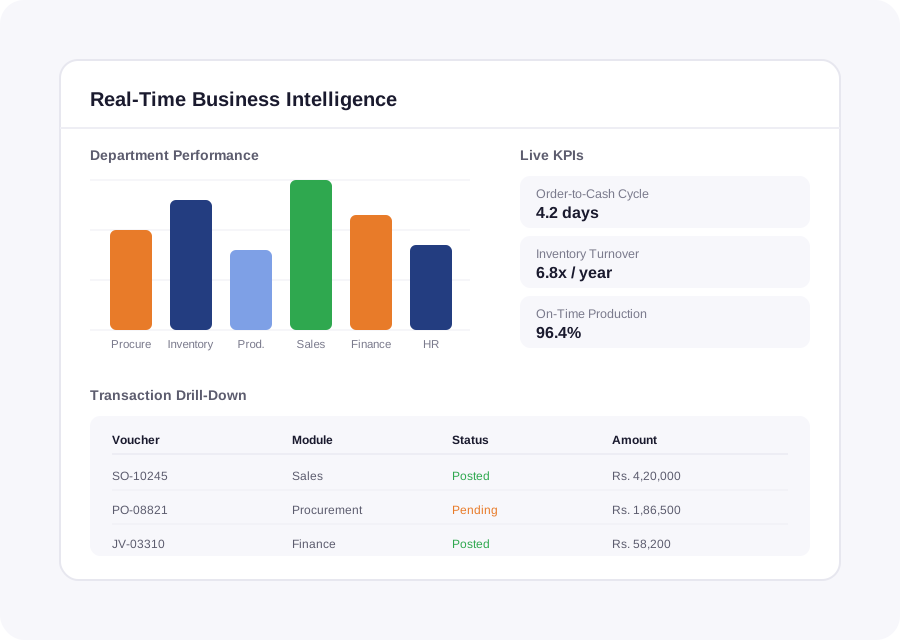
Real-Time Business Intelligence for Management
Management should not have to spend hours collecting information from different departments before making a decision. The ERP provides clear, actionable reports designed to help management access important business information faster — with transaction-level drill-down from summary reports.
Make Better Decisions With:
Your Workflow, Your Rules
Every organization has its own business rules. Instead of forcing your business to adapt to rigid processes, the ERP provides configurable capabilities for workflows, access, numbering and accounting processes.
Configurable ERP Workflows
Configure role-based access, document numbering, approval workflows and automated account postings to align ERP processes with your actual business logic.
Role-Based Access Control
Give employees access to the information and processes relevant to their roles — particularly useful across multiple departments, plants, warehouses and approval levels.
Intelligent Process Control
Reduce unnecessary data duplication with maker-checker controls, while maintaining controlled flexibility through master data.
Real-Time Inventory Costing
Simplify perpetual inventory accounting through configurable automation, with better visibility into inventory valuation, margins and production costs.
Multi-Company ERP
Manage multiple companies through a single unified platform instead of maintaining disconnected systems for different business entities.
Multi-Plant & Multi-Warehouse
Gain centralized visibility across plants and warehouses while maintaining control over inventory, procurement, production and other processes.
ERP That Grows With Your Business
Your ERP should not become a limitation as your business expands. The platform is designed around scalability, enabling organizations to grow their operations while continuing to use a connected business management environment.
Whether You Are Expanding:
Reduce Manual Work. Improve Business Control.
Improve Productivity
Automate repetitive business processes and reduce unnecessary manual activities.
Reduce Operational Costs
Optimize business resources and minimize avoidable operational effort.
Improve Collaboration
Connect departments through shared business information.
Improve Decision-Making
Give management access to timely and actionable reports.
Support Business Growth
Use a scalable platform that can adapt to changing business requirements.
Strengthen Compliance & Control
Built-in GST/TDS automation and maker-checker controls help reduce risk and keep operations audit-ready.
Who Is This ERP For?
Manufacturing Companies
Manage procurement, inventory, BOMs, production, costing and quality from one platform.
Engineering & Industrial Businesses
Control purchasing, inventory, production activities, jobwork and financial processes.
Trading Businesses
Manage purchasing, inventory, sales, receivables, accounting and multi-location operations.
Growing Enterprises
Manage multiple companies, plants, warehouses and departments through a unified ERP environment.
Finance & Accounting Teams
Automate accounting postings, GST, TDS, assets and financial reporting.
Organizations With Complex Workflows
Use configurable approvals, role-based access and maker-checker controls to align ERP processes with business rules.
Why Choose Our ERP Platform?
One Unified Platform
Manage companies, plants, warehouses and departments through one connected system.
Your Workflow, Your Rules
Configure access, document numbering, approvals and accounting processes according to your business requirements.
Built to Scale
Adopt an ERP platform that can grow alongside your organization.
Enterprise Features Made Simple
Get powerful ERP capabilities through a user-friendly experience.
Intelligent Process Control
Reduce data duplication and strengthen operational controls with maker-checker workflows.
Real-Time Inventory Costing
Simplify perpetual inventory accounting with configurable automation.
Frequently Asked Questions
What is ERP software?
ERP software is an integrated business management platform that connects multiple departments and business processes through a centralized system.
What business functions does this ERP cover?
The platform covers procurement, inventory, production, quality, marketing and sales, accounts, HR, payroll and employee self-service.
Can the ERP manage multiple companies?
Yes. The platform is designed to manage multiple companies, plants and warehouses through a unified interface.
Is this ERP suitable for manufacturing?
Yes. Manufacturing capabilities include BOM management, alternate items, material consumption comparison, per-unit costing, production processes, quality management and real-time IPQC monitoring.
Does the ERP support inventory traceability?
Yes. The platform supports end-to-end stock traceability along with supplier batch and costing information.
Does it support GST and TDS?
Yes. The accounts module includes GST-related automation and statutory reporting, as well as automatic TDS calculation and posting.
Does it support payroll and employee self-service?
Yes. HR capabilities include centralized employee information, document access, flexible payroll structures, controlled salary release, biometric integration, attendance management and employee self-service.
Does it support E-Invoice and E-Way Bill?
Yes — the platform is designed to be E-Invoice and E-Way Bill integration ready.
Can ERP workflows be customized?
Yes. The platform emphasizes configurable workflows, role-based access, document numbering, automated postings and controlled business processes.